


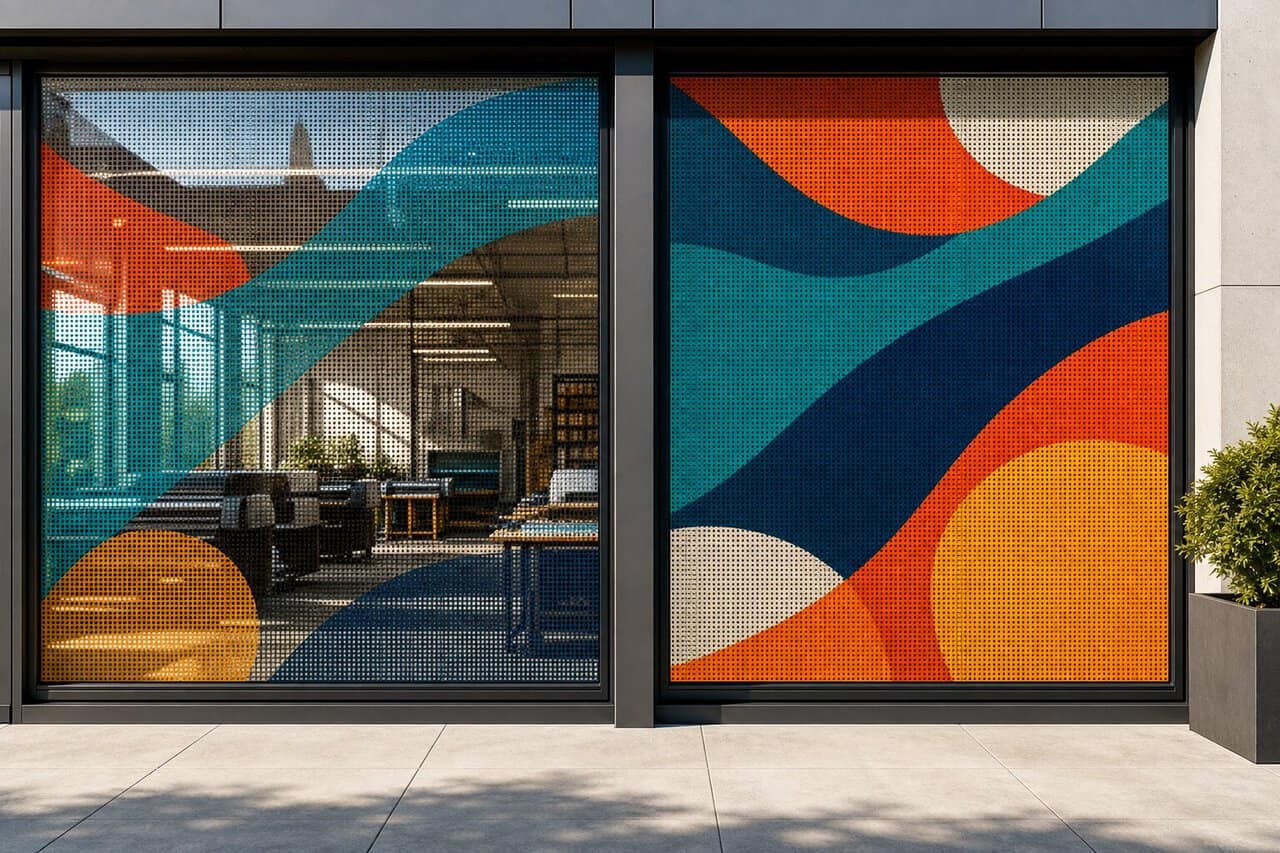
Perforated film comes in ratios like 50/50 and 70/30, numbers describing the split between solid printable vinyl and open perforation holes. The ratio you pick controls three things at once: interior visibility, exterior graphic strength, and how much daylight gets in. To understand why those trade-offs occur, start with how perforated window decals work, including their materials, perforation pattern, and one-way-vision effect.
Neither ratio is better in every case, and the right pick often changes between a storefront and a vehicle.
Table of Contents
- What the Numbers Actually Mean
- 50/50 Perforated Film: The Visibility Option
- 70/30 Perforated Film: The Graphic-First Option
- Side-by-Side: Visibility vs. Graphic Impact
- How Perforated Film Looks at Night
- Storefronts vs. Vehicles: Which Ratio Is Right for Each?
- Cost and Lamination: What Else Factors In
- The Quick Decision Guide: Which Ratio to Order
- Beyond 50/50 and 70/30: Other Perforation Ratios
- Perforated Window Vinyl Printing in Los Angeles
- One-Way Vision Window Film: How the Effect Works
- Perforated Window Film for Cars and Vehicles
- Installing Perforated Film: What to Know Before You Order
- Custom Perforated Window Graphics for Los Angeles Businesses
- Frequently Asked Questions
- About the Author
What the Numbers Actually Mean
The two numbers in a vinyl ratio like 50/50 or 70/30 describe percentages of solid vinyl and open hole area, in that order by convention. In a 70/30 film, roughly 70% of the surface is printable vinyl and 30% is open hole. In a 50/50 film the split is even.
That single fact drives most of how the film performs. More vinyl usually means more surface for ink and a bolder graphic from outside. More open area usually means more light passing through and a clearer view from inside. Some manufacturers describe the same split by "transparency" instead, so confirm the correct spec sheet for a given product before you order.
The Role of Hole Size and Pattern
The ratio isn't the only variable. Hole diameter and spacing matter too, even between two rolls sharing the same ratio.
Perforation holes typically run between 1.5mm and 2mm, and the size affects how the image reads up close versus from a distance. A 50/50 film with larger holes can work well for long-distance viewing, like a rear vehicle window seen from a following car. Smaller, tighter holes tend to hold finer detail, which matters more for storefronts where pedestrians walk right up to the glass.
50/50 Perforated Film: The Visibility Option
50/50 perforated film splits the surface evenly between vinyl and holes, which makes it the strongest option when the person behind the glass still needs to see outside clearly.
That even split costs some graphic punch. With half the surface unavailable for ink, colors read a bit softer and fine text can get lost in the perforation pattern. Bold shapes, thick lettering, and high-contrast artwork hold up better on 50/50 than intricate photography does.
Best Applications for 50/50
50/50 tends to be the safer call for vehicle rear windows, since drivers need a working sightline. It also fits storefronts where staff need to monitor the exterior, offices wanting partial privacy without going dark, and short-term promotional windows where print density matters less than visibility.
70/30 Perforated Film: The Graphic-First Option
70/30 perforated film uses more of the surface for vinyl, which typically gives the printer more room to hold ink and produce a richer, more detailed image from outside.
That extra vinyl comes at the expense of interior visibility. Daylight transmission usually drops compared to 50/50, and looking outward through a 70/30 window can feel noticeably darker. For a window whose main job is getting a message noticed rather than supporting sightlines, that trade tends to work in the business's favor. Businesses using the glass primarily as a promotional surface should also consider how the film fits into a broader window advertising strategy using vinyl graphics.
Best Applications for 70/30
70/30 is common for retail storefronts, point-of-purchase displays, restaurant windows showing food imagery, and office branding where logo clarity matters more than seeing outside. It also suits privacy-forward commercial windows, where blocking outside view during the day matters most.
Side-by-Side: Visibility vs. Graphic Impact
Neither ratio is universally stronger. Each one trades one benefit for the other, and the right pick depends on what the window needs to do.
| Factor | 50/50 | 70/30 |
|---|---|---|
| Inside visibility | Stronger | Weaker |
| Outside graphic impact | Moderate | Stronger |
| Color density | Lower | Higher |
| Fine detail | Softer | Sharper |
| Daylight transmission | Higher | Lower |
| Daytime privacy | Moderate | Stronger |
| Vehicle suitability | Usually appropriate | Usually not recommended |
It's easy to assume 70/30 is simply the stronger film, since it prints bolder and gives more privacy during the day. That's only true if graphic impact is the goal. If the window needs to support driving visibility or security sightlines, looking out through the denser pattern can be hard, and the bolder graphic usually isn't worth the cost.
How Perforated Film Looks at Night
Perforated film's one-way effect depends on which side of the glass has more light, and after dark that balance often flips.
During the day, the outside is usually brighter than the inside, so the eye focuses on the printed graphic and the holes seem to disappear. At night, once interior lights come on, the interior can become the brighter side. People outside may then see in more easily, and the graphic loses some punch. This holds true for both 50/50 and 70/30.
If nighttime privacy matters, the film alone isn't the full answer. Blinds, interior lighting adjustments, or an added opaque section can help fill that gap.
Storefronts vs. Vehicles: Which Ratio Is Right for Each?
The right ratio depends on whether the glass is on a building or a vehicle, since the two settings carry different priorities.
For storefronts, the choice comes down to what the window is doing. Use 70/30 for advertising impact and daytime privacy. Use 50/50 when staff need to see outside or the space needs to feel open.
Before choosing perforated film, compare the available business window graphic vinyl types and installation requirements, especially if the project may be better suited to opaque, transparent, or cut-vinyl graphics.
For vehicles, the starting point is legal rather than aesthetic. States commonly restrict materials that obstruct a driver's view or cut light transmittance through vehicle windows, and perforated film falls under those rules the same way tint does. Installers typically recommend 50/50 for rear windows and fleet vehicles, since it preserves more outward visibility. That's general guidance, not legal advice. Confirm the specific application with a qualified installer or your local motor vehicle authority before ordering.
Cost and Lamination: What Else Factors In
The ratio you pick isn't what drives the price, and it isn't the only decision left once you've chosen one. Two other factors do more of the work: total project cost and whether to laminate.
On cost, square footage, film grade, lamination, installation complexity, and artwork prep move the price far more than the vinyl-to-hole split does. A 70/30 film uses slightly more ink per square foot, but for most projects that difference is small next to the other line items. The more useful question isn't whether one ratio costs more than another, but what the whole job comes to once those factors are priced in.
On lamination, the case is stronger. An unlaminated perforation is an open hole, so dirt, moisture, and weather reach the adhesive and print through it. Lamination closes that gap and typically improves durability at the edges, where lifting starts first. 50/50 usually benefits most from it, since its larger open area collects debris faster than a denser pattern. Short indoor campaigns can often skip it, but direct sun, road weather, or regular cleaning call for an optically clear laminate.
The Quick Decision Guide: Which Ratio to Order
There's no perfect ratio, only the one that fits the job. Three questions settle most decisions.
Is visibility from inside critical, for staff, security, or daylight? Choose 50/50. Is graphic impact the top priority? Choose 70/30. Is the film going on a vehicle rear window? 50/50 is the common starting recommendation, paired with a clear laminate, though you should confirm the correct choice for your vehicle and jurisdiction before ordering.
Know which ratio fits your project — or still deciding between 50/50 and 70/30? Share your window dimensions and project details to receive a FREE estimate.
If none of those questions gives a clean answer, a mid-range ratio like 60/40 can split the difference. A print shop that asks how the window gets used, not just which ratio sounds better, will help you find the right call.
Beyond 50/50 and 70/30: Other Perforation Ratios
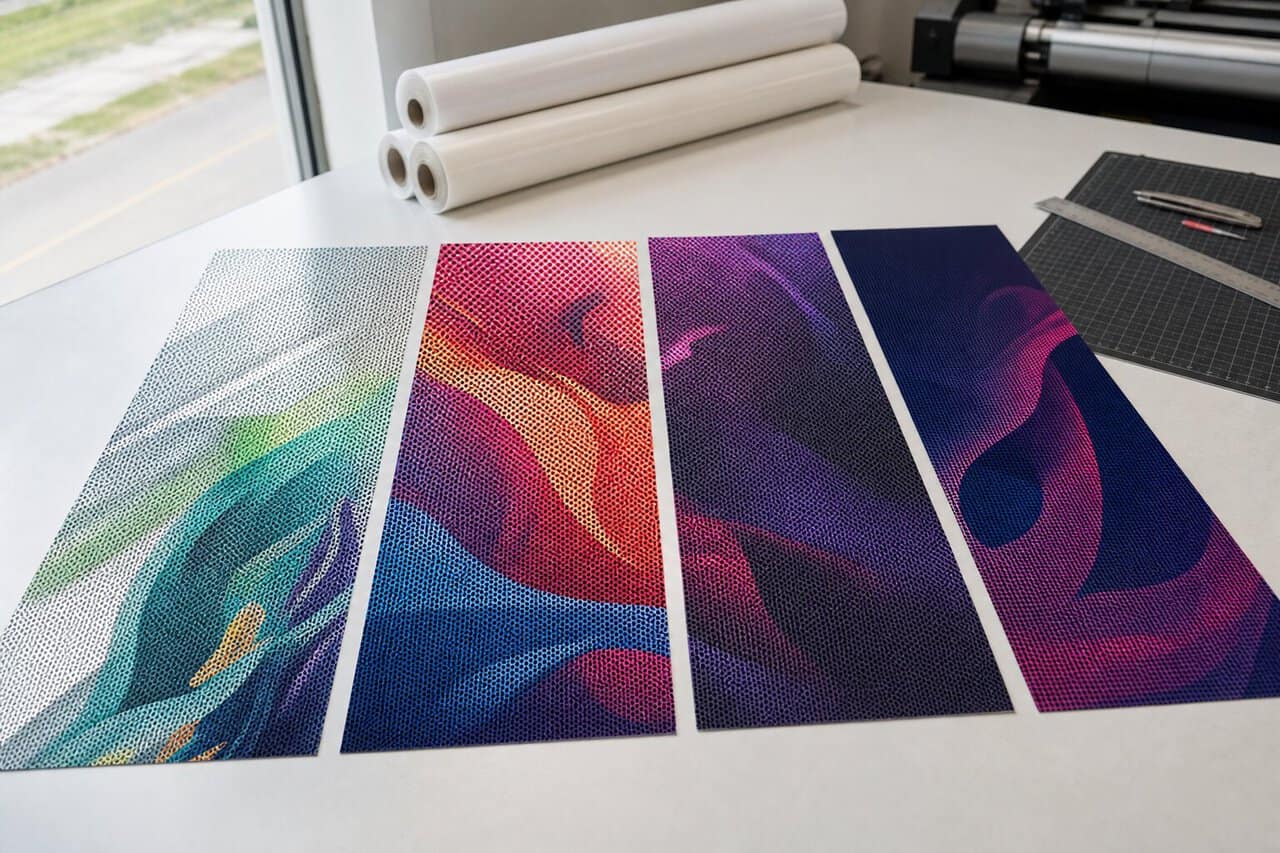
50/50 and 70/30 sit at opposite ends of a spectrum that includes several ratios in between, each with its own trade-off point.
60/40 is often described as the industry's all-rounder, since it balances enough vinyl for detailed graphics with enough open area to keep a usable view through the glass. It can be an ideal middle ground for a client who can't decide between the two more common ratios. 65/35 sits close to 50/50 in feel but pushes slightly more toward print density, and it's occasionally used where a project can tolerate a bit less visibility than standard. 80/20 sits at the far end from 50/50, maximizing graphic density and daytime privacy at the cost of nearly all outward visibility. That trade-off limits it to stationary architectural applications rather than anything with a driver behind it.
Ask a print shop which ratios and film types they typically stock before designing around one that requires a special order.
Perforated Window Vinyl Printing in Los Angeles
Los Angeles adds a few local variables to the ratio decision beyond the basic visibility-versus-impact trade-off.
Sun exposure and window orientation affect how long a graphic holds its color, since intense, direct sunlight accelerates ink fade more than filtered or indirect light does. A west-facing storefront getting afternoon sun all summer needs a different lamination plan than a shaded side-street window. Business hours matter too. A daytime retail shop can lean into 70/30 without much downside. A restaurant with heavy evening traffic may want to think through the nighttime visibility reversal before committing to a dense ratio. Large-format window graphics can also fall under local sign permitting rules depending on how much of the glass they cover, and those thresholds vary by city and by property. Check with the property manager or a local permitting professional before a large-format install goes up, rather than assuming a given size is automatically exempt.
One-Way Vision Window Film: How the Effect Works
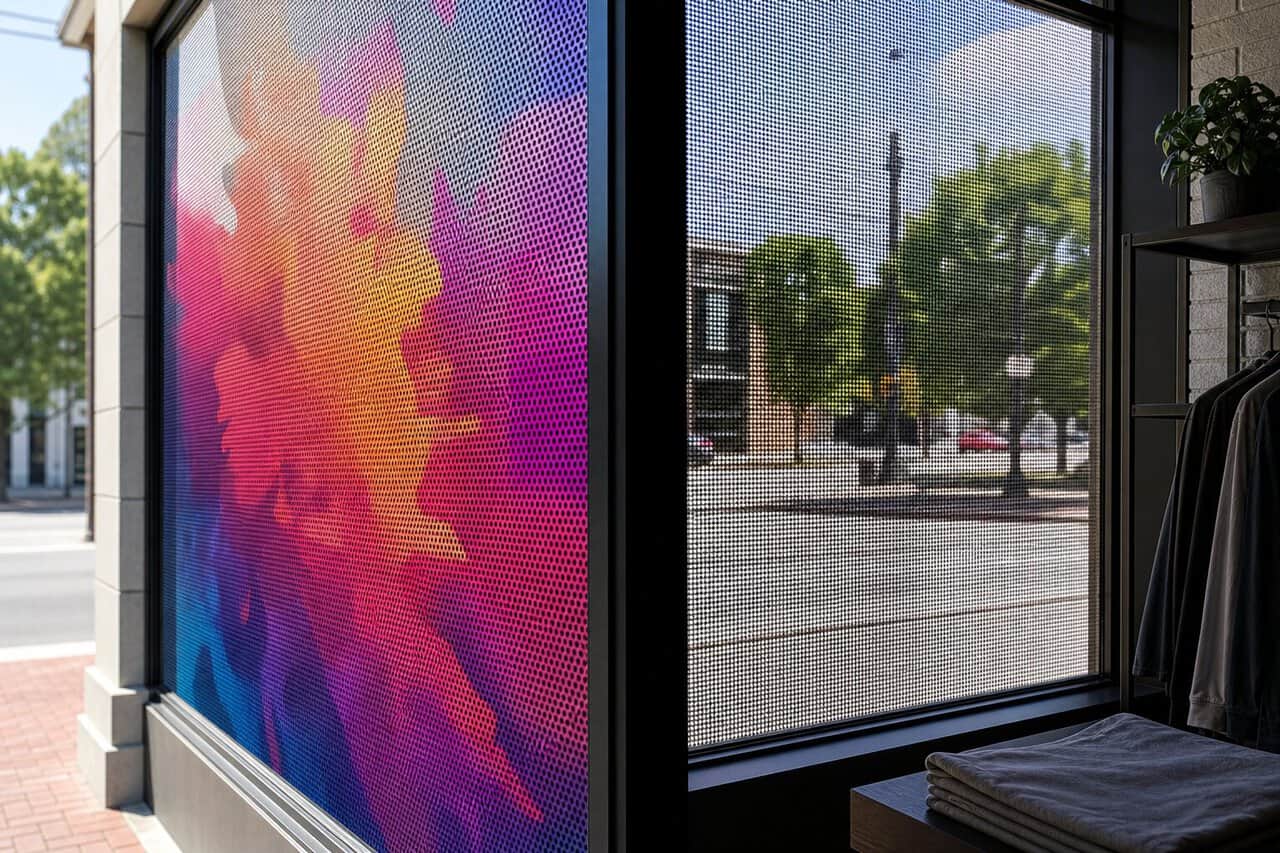
The one-way vision effect happens because the eye naturally focuses on whichever side of the glass has more light, not because the film is physically transparent from only one direction.
The exterior-facing side carries the printed graphic, while the interior-facing side is typically black. Black absorbs light rather than reflecting it, so from inside, the eye isn't fighting a bright reflection and can focus through the open holes toward the brighter world outside. From outside, the printed face reflects light and the holes become too small and too dark to register against it, so the brain fills in a continuous image. This is the same basic mechanism regardless of ratio, whether the film is 50/50 or 70/30. What changes is how much surface carries the printed image, and how much stays open for the eye to look through.
Viewing distance, lighting conditions, and lamination all affect how convincing the effect looks in practice. A film viewed up close under harsh light behaves differently than the same film seen from across a parking lot at dusk.
Perforated Window Film for Cars and Vehicles
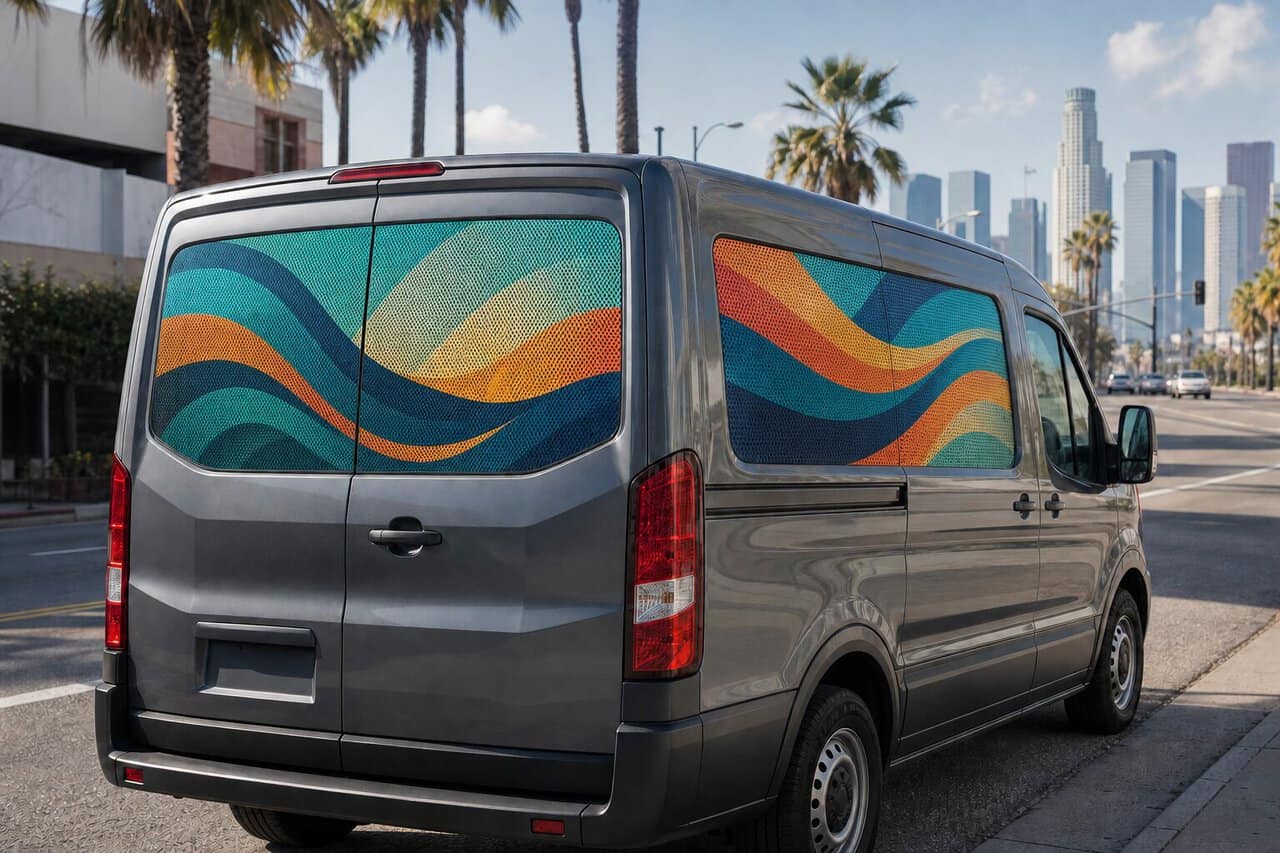
Vehicle applications carry more legal weight than storefronts, since the restriction is written into the vehicle code rather than left to a landlord or property manager.
The mechanism matters here. California's transparent-material restriction applies to perforated film for the same reason it applies to tint. The film reduces light transmittance, and Section 26708.5 doesn't distinguish between a solid tint and a printed, perforated pattern (California Legislative Information). That's the relevant legal consideration.
Installers commonly recommend 50/50 for rear glass and fleet windows because it preserves more of the driver's sightline than denser options. That recommendation is based on general visibility performance, not a certification that any particular film meets the requirement for a particular vehicle and window. Ask your installer to confirm the exact film and application meet current local rules before it goes on the glass. Once compliance is verified, this rear-window design can easily be coordinated with Fleet Graphics on the vehicle's doors and body panels for a cohesive commercial look.
Lamination goes from optional to close to mandatory once a graphic goes on a vehicle. An unlaminated perforated graphic lets rain and road grime collect in the open holes, and that trapped moisture can blur or block the driver's view once it gets wet. Manufacturers commonly recommend a vehicle-rated, optically clear laminate for this reason. A standard laminate can introduce haze right at the perforation edges in a way it wouldn't on solid vinyl. Some vehicle-grade films use a double liner during manufacturing to protect the laminate surface until installation. That helps on curved glass, where handling is harder than on a flat storefront panel.
Installing Perforated Film: What to Know Before You Order
Before placing an order, a handful of details determine whether the finished install performs the way you expect.
Exact window measurements prevent panel mismatches and excess trimming at the edges. Glass condition matters too, since old adhesive, silicone sealant, or surface coatings can affect how well the film bonds. Proper surface preparation and the correct process for installing and removing vinyl graphics can reduce lifting, trapped debris, adhesive residue, and damage to the glass.
Confirm whether the application goes on the interior or exterior face of the glass, since most window perf is designed for exterior application and outdoor weather exposure. Viewing distance affects how small text can go before it stops reading clearly, and lighting conditions affect how the one-way effect performs once installed. For vehicles specifically, confirm any legal restrictions before finalizing a design. A print shop should walk through all of this before production starts, not after the film arrives cut and ready to install. That includes which film type and laminate they recommend, and why.
Planning perforated graphics for a storefront, office, or vehicle? Tell us about your project so the Plato Graphics team can review the application, dimensions, visibility requirements, and recommended film type.
Custom Perforated Window Graphics for Los Angeles Businesses
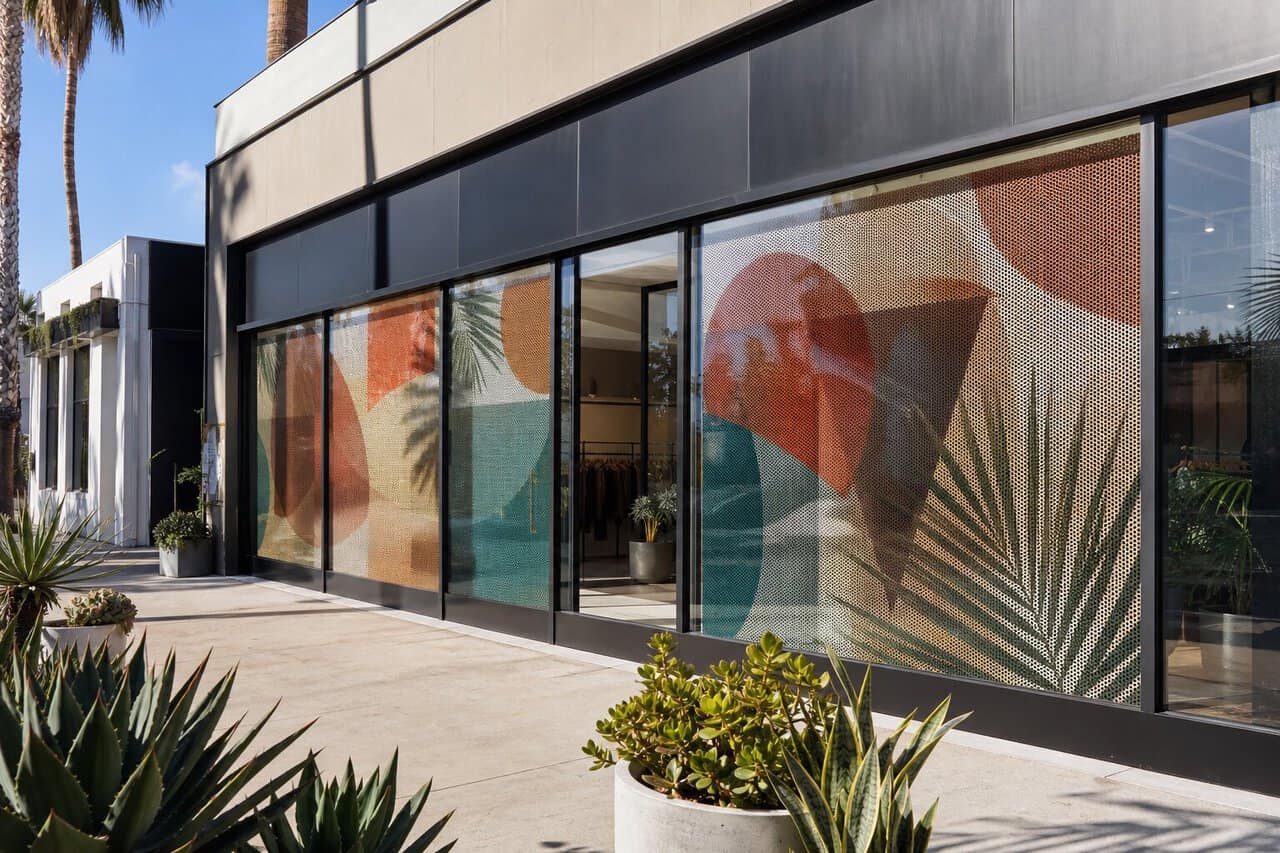
The most useful thing a print shop can offer isn't just printing the film. It's helping you choose the right ratio, material, and finish for your custom window decals before production starts.
A striking 70/30 storefront graphic becomes a problem if staff genuinely needed to see outside. A crisp 50/50 graphic can disappoint a client expecting dense, poster-like color. Getting this right means asking a few questions. How is the window used day to day? Does visibility matter for security or operations? How much sun does the glass take on, and how long does the graphic need to last before a refresh? A ratio picked from a sample book can get switched once you explain how the window actually gets used. Restaurants, retailers, gyms, and medical offices all use these windows differently, and a great fit for one business type doesn't automatically carry over to the next.
Recommendations like these reflect general industry practice, not lab testing on a specific product. A given film's real-world performance depends on its manufacturer, thickness, and how well it's installed. When a print shop recommends one ratio or laminate over another, it's worth asking what that's based on. Is it the film's documented performance, the shop's available inventory, or a preferred supplier? Knowing which one is driving the suggestion helps you weigh the advice. A quick call or email with your window dimensions and intended use is usually enough for a shop to point you toward a correct starting option.
Avoid ordering a film that looks good on a sample but performs poorly on your actual window. Send Plato Graphics your dimensions, intended use, and installation location to get a recommendation and a FREE estimate.
Frequently Asked Questions
What is the difference between 50/50 and 70/30 perforated film?
The numbers describe how much of the film is solid vinyl versus open hole. 50/50 splits the surface evenly, which gives the strongest interior visibility. 70/30 shifts more surface to vinyl, which gives a bolder, more detailed graphic from outside but a darker view from inside. Neither is the right pick for every situation. Vehicle rear windows lean toward 50/50 for driver visibility, while storefronts chasing maximum street-level impact often land on 70/30.
Can you see through perforated window film at night?
Not the way you can during the day. The one-way effect depends on which side of the glass has more light, and interior lighting usually wins after dark. Once that happens, people outside can see in more easily, and the printed graphic reads less clearly. This affects 50/50 and 70/30 the same way, since the ratio doesn't control the light balance. If nighttime privacy is a real requirement, plan for blinds or an opaque section rather than relying on perforated film alone.
How long does perforated window vinyl last outdoors?
It depends mostly on sun exposure, cleaning habits, and whether the film is laminated, so treat any specific number as a starting estimate rather than a guarantee. As one data point, 3M's Scotchcal 8170 perforated window graphic film carries a manufacturer-rated expected performance life of three years. That figure applies to unprinted film without added graphic protection, on a flat, vertical, non-vehicle window (3M Window Graphic Film Product Bulletin 8170). Laminating a graphic commonly improves durability beyond a single product's base rating, since the overlaminate blocks UV and keeps weather and moisture out of the perforations. Ask your print shop for the specific film's rated lifespan before ordering, since it varies by brand and thickness.
What does the perforation ratio mean for window graphics?
It tells you how the surface splits between solid, printable vinyl and open perforation holes. A higher first number, like 70/30, means more vinyl and a stronger printed image. A lower first number, like 50/50, means more open area and a clearer view through the glass. The ratio shapes color density, fine detail, and daylight transmission all at once. It's worth choosing based on what the window needs to do, not which sample looks best in a swatch book.
Is 50/50 or 70/30 perforated film better for a storefront window?
It depends on what the window is for. If the storefront's job is advertising, 70/30 usually wins because the extra vinyl carries color and text more clearly from the street. If staff need to see outside, or the space relies on natural light, 50/50 tends to work better. A cafe that wants an open, bright feel might lean 50/50, while a retailer chasing maximum street-level attention often prefers 70/30. A mid-range ratio like 60/40 can split the difference if you're torn.
What is the best perforated window film for cars and vehicles?
Start with the legal fact. California Vehicle Code Sections 26708 and 26708.5 restrict materials that obstruct a driver's view or reduce light transmittance through the windshield, side, and rear windows (California Legislative Information). Within that legal frame, 50/50 is the common professional recommendation for vehicle rear windows, since it preserves more of the driver's outward view than denser ratios. That's general guidance, not a legal ruling on your specific vehicle, so confirm the exact film and application with a qualified installer before it goes on the glass. Lamination with a vehicle-rated, optically clear film is also worth treating as close to a requirement, since unlaminated film can trap rain and grime in the holes.
How much does perforated window film cost for a business?
Cost depends more on square footage, film grade, lamination, and installation complexity than on the ratio itself. A 70/30 film uses slightly more ink since more surface gets printed, but that difference is usually small compared to the other cost factors. The most reliable way to get an accurate number is asking a print shop for a quote. Give them your exact dimensions, chosen film, and whether lamination is included, rather than estimating from the ratio alone.
What is the difference between perforated window decals and perforated window film?
In everyday shop language, the terms often overlap. "Film" usually refers to the raw material sold in rolls before it's printed or cut. "Decal" usually refers to the finished, printed piece cut to size and ready for the glass. Both terms typically describe the same underlying vinyl. The distinction matters more when you're ordering. Asking for film might get you a roll, and asking for a decal might get you a finished, installed graphic, so it helps to be specific about what you need.
Can perforated window vinyl be printed with custom graphics?
Yes. Perforated vinyl runs through the same wide-format printers used for banners and other large-format graphics. Most films are compatible with solvent, eco-solvent, UV, or latex inks depending on the product, so full-color logos, photography, and custom artwork can print onto it without special equipment. The perforation pattern does limit how small text can go before it loses readability, since fine strokes can fall right into the holes. A print shop can usually tell you the minimum text size for a given ratio before you finalize artwork. That check saves a reprint if the design turns out too delicate for the pattern.
Is perforated window film a good choice for privacy in Los Angeles?
It works well for daytime privacy, since the printed graphic keeps passersby from seeing in clearly while the sun is out. It's not a perfect nighttime solution, since the light balance that creates the effect reverses once interior lights come on. For businesses that want more privacy around the clock, pairing it with blinds or an opaque lower section covers the gap it leaves after dark. On its own, it's better understood as an advertising surface that happens to add some daytime privacy, not a full privacy product.
About the Author
Charles Platon is the founder of Platon Graphics, specializing in banner printing, signage, and event graphics. He has extensive experience producing mesh and vinyl banners for construction sites, outdoor advertising, and high-wind environments.


